Showing posts with label Breastfeeding. Show all posts

Saturday, October 12, 2013

Baby Sipper Cup to Wean Your Baby from Bottle Feeding


Parenting is one of the most challenging responsibilities especially for mothers. An infant baby demands different care and upbringing at different stage of its growth. In order to get a baby off to a healthy start parents need to expose them to products that are thoughtfully designed to promote baby's development, including independent feeding habits with high-quality, tableware products such as sipper cups, plates, bowls and utensils that would delight the little ones.

A baby should switch from a bottle to a sippy cup by the time they turn one. However, the key problem lies in making them learn how to use a sippy cup. In fact, learning how to hold a sipper cup ensures development of a strong fist grasp along with the ability to move things from the hand to the mouth with ease. However, using a baby sipper cup requires much more than simply picking an object up and putting it into the mouth.

Experts say that a sipper cup should be introduced when you introduce solid food to your baby i.e. around six months of age in preparation for dissuading the baby from the bottle or breast around one year of age. Drinking from a cup does not cause the liquid to collect around the teeth, which in turn is good for oral-motor development.

Babies have all good reasons for refusing sipper cups. Remember that all babies developing a different way so there is no need to get worried if your child is not able to handle one. Have a glimpse at some of the tips that could help you to introduce sipper cup successfully to your baby.

  • Your baby may not be interested to suck the cup, you have to dip the spout of the cup into the liquid he drinks such as milk or juice to allow him to have a taste of it.

  • You have to demonstrate how to use the cup by using different expressions and sounds.

  • To begin with, a soft, rubbery spout that will seem more of a nipple should be given to your baby, which in turn will be more familiar to your baby.

Baby sipper cup is a great way to transit your baby from bottle or breast feeding to a regular cup. This helps improve hand-to-mouth coordination at the same time some independence to develop his feedinghabits. There are different kinds of sippy cups available in the market, with all kinds of spouts. In fact, you can shop them from online stores at highly affordable prices.

Saturday, September 28, 2013

Advice for Breastfeeding Problems

                                                 
       Watch Videos
The message is clear. Breastfeeding is at its most popular level in more than 35 years, with the Centers for Disease Control and Prevention reporting as many as three out of four women initiating nursing — up from one in five in 1972, the lowest rate noted in the last century, according to a review in The Journal of Nutrition. There are more lactation consultants than ever, government-funded support programs, faster and more affordable breast pumps and even iPhone apps available to help moms succeed at nursing. Yet at the same time, only 22 percent of babies receive breast milk until at least age 1, as recommended by the American Academy of Pediatrics. So what's the problem? Why are so many moms starting and then stopping breastfeeding or never starting at all?
Dozens of booby traps sabotage our efforts. As described by lactivists (lactation activists), booby traps are barriers that hinder a mother's ability to nurse successfully. Physical obstacles, such as low milk supply or a bad latch, as well as social ones, like nursing in public, put pressure on well-intentioned moms to toss out their nursing bras and opt for a bottle. “Nursing problems have become an epidemic,” says Diana West, a renowned lactation consultant who co-wrote the latest edition of The Womanly Art of Breastfeeding. When breastfeeding doesn't come easily, “Moms automatically assume they've done something wrong,” West says. But they haven't. They've just faced some obstacles that can seem insurmountable at the time. Doctors, lactivists, moms and more weighed in on the most common breastfeeding “booby traps.” Here's how to overcome them and maximize your chances of having a successful breastfeeding experience.

Tuesday, September 17, 2013

Breastfeeding

Breast-feeding is beneficial to the child as it is to the mother. But getting the most out of breast-feeding also requires a well thought-out program that covers a period from the moment of conception, to the time the baby sucks his or her first breast milk, and all the way to the time he or she weans.


Health program for the mother


The program must be comprehensive enough as to ensure that the mother will stay healthy all throughout the period of her pregnancy until she gets to nurse the baby. After all, it takes a healthy mother to feed a healthy baby. An effective health program for the mother consists among other things of a proper diet, enough exercise, and staying away from pollutants or an
unhealthy environment. This may not be a concern for mothers who have no health problems in the first place. But if the mother has a record of health problems in the past, or if she has been used to a free-wheeling lifestyle where, for example, intake of fatty and high-cholesterol foods, alcohol or nicotine has been excessive or uncontrolled, it is necessary for her to take steps to ensure that she puts herself back in the pink of health.

                                        Watch Videos
Breastfeeding instructions


Specific tasks need to be undertaken during the initial six months of nursing itself. The flow of breast milk does not normally stabilize until two or three days after delivery, especially for mothers giving birth for the first time. During this hiatus, a mixture of milk (about two thirds), water (about one third), thin gruel, and sugar can be fed to the infant.


Full ration of breast milk should be fed to the baby as soon as its supply stabilizes. Mothers have to be sensitive to how often their babies need to suckle. The first ten days of the baby's total dependence on mother's milk requires paying close attention to how the baby reacts to each feeding. Both under and over feeding can have awful consequences to the baby. 
The stomach of an infant is thin and delicate, yet unaccustomed to the process of digestion, and is likely to stimulate feedback to be baby's brain in the number of ways. How the baby communicates and makes himself or herself understood by the mother is therefore crucial for both of them to get the breast-feeding program on track.


After a week up to ten days, a feeding interval of three to four hours is generally advisable. This must be done day and night. A practical timetable for both mother and child with regards to night feeding is setting it at ten o'clock in the evening and five o'clock the morning after. It is not good to leave the baby sucking the nipple until both mother and baby find themselves asleep. This can only further deprive them of more time for sleep; after all sleep is something which they are often short of. A structured break allows sufficient time for proper digestion to take place and thereby stabilize the baby's bowel movements. It makes babies less irritable and cranky, and because of which they are wont to show by crying.


The breast-feeding program should be consistently applied until the baby reaches
 six months after birth. It is even advisable to carry on with this program beyond 
this period, or until the time the baby weans, for as long as the mother stays 
healthy and is able to maintain producing breast milk at the same level of
quantity and quality.

Breast compression

Breast compression is helpful when breast-feeding runs into problems. If you
 are the nursing mother, here is how you can apply it.

1. The baby held with one arm, cup your breast with the other arm. Put your
 thumb on top of the breast while your other fingers are slightly pressing the
 breast from under it, two or three inches away from your nipple.

2. Being alert all the time is not necessary, but you still need to keep a close
 watch on the suckling. Guide the baby so that he or she can quickly get the 
hang of an open-pause type of feeding; this will allow him or her to drink more 
volume of milk. When the baby begins to nibble or when he or she stops
 drinking, compress your breast firmly but not too hard. Breast

compression causes the milk to flow and the baby is likely start to sucking again

Keep pressing your breast until your baby stops responding to the compression.
 If your baby does not latch away from your breast even after you have released 
the pressure, pause for a few seconds and then start compressing again. 
Releasing the pressure allows you to rest your hand; it also induces your milk 
to flow into the baby's mouth again. If your baby ceases to suck upon releasing
 the pressure on your breast, it is again likely that he or she will resume sucking
the moment he or she senses milk. If the baby is unable to drink enough milk, 
try to recompress your breast.

3. Go on feeding with compression until your baby stops to drink. Pause until
your baby begins to drink again, without your egging him or her on. If you can 
sense that your baby has stopped drinking, let him or her unlatch, or just take 
him or her off from your breast.

4. See if your baby still wants to feed. If he or she does, offer the milk from 
the other breast. Follow the same procedure you earlier did with the other side.
 You can repeat switching one breast to the other a number of times unless 
your nipples get sore. Help your baby improve his or her latch.
Pitfalls of breastfeeding

One of the more common mistakes made by nursing mothers, particularly
those who are inexperienced, is feeding their babies every time they cry or 
show signs of discomfort, thinking they are hungry. This may lead to over 
 feeding. This is not necessary nor recommended. When over feeding happens,
 the digestion process can get disrupted causing, among other things,
loose bowel movements, more restlessness on the part of the baby and even
fever.

Also, there had been cases when mothers just cannot do away with unhealthy
 habit or tradition.Inadequate information on the part of lactating moms is 
often to blame, sometimes leading to more health problems. One misconception
 is eating as much food as the mother can in the belief that this will fully 
support the milk production capacity of her mammary glands. While input
often equals output, it does not necessarily mean that gaining weight equals
 gaining health. For that is what excessive eating is all about: gaining weight.
 The breasts may supply enough milk, but the overall health condition of the
 mother may be compromised.
Another pitfall which often victimizes young mothers who are nursing for the 
first time is drinking dark sweet beer called porter. The practice draws from 
tradition where many a mother has been taught that porter increases the 
supply of milk and helps sustain her perfect physical health. Without doctor's 
approval on a case to case basis, this practice poses threats to the mother. 
There had been cases when porter intake, particularly in large amounts and 
on a regular basis, has instead caused the loss of milk supply in the mother
 and induced loose bowel movements in the baby. Mothers may also experience
 headache, thirst, hot skin, drowsiness, and fever.

Thursday, September 12, 2013

Breast to Bottle Feeding

Ready to wean baby from the breast or add bottles to the feeding schedule? Here’s how to make it smooth for both of you.


You enjoy breastfeeding, but you have also started dreaming about sleeping through the night again. Or going back to work. Maybe both.
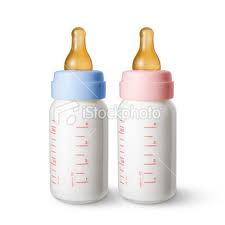
That means one thing: It’s probably time to give your child her first baby bottle. Maybe the bottle will contain breast milk, or maybe you’ll be switching over to baby formula. Either way, you’ll need to wean your little one from breast-only feeding to taking a baby bottle -- a transition that is not always easy but does not have to be difficult.
To help you make that change, we asked pediatricians and parents on  parenting message boards for their tips on easing the transition from breast to bottle feeding. Here’s what they had to say.

Bottle Feeding: The Key to the Transition

Weaning my baby to a bottle was easy as pie, says one parent.Getting the baby to take a bottle was a nightmare, says another. Most parents’ experience is probably somewhere in the middle.
“It’s true that weaning your baby to a bottle can be difficult,” says Laura Jana, MD, pediatrician and co-author of Heading Home with Your Newborn: From Birth to Reality. “But I also like to start by pointing out that it isn't always.”
The key to making a smooth transition from breast to bottle feeding is to start early, but not too early.. 


When Should You Introduce Your Baby to Bottles?

Because every baby and situation is different, the answer is that there really is no standard time.
But there is a good rule of thumb: Introduce babies to the bottle when they are “fairly good at breastfeeding but not so used to it that they won’t do anything else,” says pediatrician Jennifer Shu, MD, co-author, with Jana, of Heading Home With Your Newborn, and Food Fights: Winning the Nutritional Challenges of Parenthood Armed with Insight, Humor, and a Bottle of Ketchup.
Most babies are well adapted to breastfeeding in the first two to six weeks, Shu says. You’ll know breastfeeding is established when baby begins putting on weight, and can latch on easily to your nipple and feed until they’re done.
Why wait until baby is good at breastfeeding if you’re trying to introduce bottles? Because many moms “combination feed“ -- offering the breast perhaps first thing in the morning and last thing at night, with bottles of breast milk or baby formula the rest of the day.

Bottle Feeding: Deciding When Baby -- and Mom -- Are Ready

Not every baby is ready to make the transition to bottles by six weeks, so let baby tell you when the time is right. Like other milestones, such as walking and talking, your baby is the one to set the pace and tell you when she’s ready.
Two signs that your infant is ready to transition to a baby bottle:
  • She sucks on your breast a few times and then stops nursing.
  • Baby just starts losing interest in your breast.
Babies aren’t in this weaning thing alone, of course -- mom is also a big part of the picture. Sometimes a baby is ready to transition to the bottle, but mom isn’t so sure.
“It was so easy [weaning him to the bottle], I felt a little bad!” says Natalie, mom to Quentin, on the parenting boards. “I had hoped he'd put up a little fuss, wanting mommy more, but nope! He took it right away.”
It’s natural to be a little sad when you begin to breastfeed baby less, say the experts, but it can be a freeing time as well, with both you and your child becoming more independent. Each mom and baby must handle the transition in their own way.
“[Breastfeeding] was a very special bonding time,” says AllieGirl77, mother to Sarah Elizabeth. “I still hold her to me skin-to-skin from time to time just to bond and have her feel that comfort.”

Introducing Bottles: How to Wean Your Baby From Breastfeeding Only

Once you’re ready to supplement breastfeeding with bottle feeding or to wean your baby from the breast completely, parents and pediatricians all recommend taking it slow. Weaning baby gradually is best for her and for you.
You can start by dropping a feeding every five to seven days. “Try the bottle at the breastfeeding baby is least attached to,” suggests Shu. This not only keeps stress low, but “helps mom reduce her breast milk flow" -- stemming its production gradually to avoid uncomfortable breast engorgement.
“I highly recommend having Daddy give the bottles,” says mom Courtney, who weaned her daughter to the bottle at four weeks. “While introducing the first few bottles, Mommy should not be in the room, sometimes not even in the house! Babies are smart; why would they take a bottle when the source of the good stuff is right there?”
Getting fathers involved also gives them a new bonding time with baby. But what if you need to wean baby immediately and can’t take days and weeks to make the transition?
“Put breast milk in the bottle and make sure someone else besides mom feeds the baby,” Shu tells  “Once the baby is hungry enough, he or she will take the bottle.”
To help relieve the engorgement of mom’s breasts, Shu says “cabbage leaves are one thing that people swear by.” Try slipping a cold leaf into each bra cup and leaving them on until they wilt. You can also try “cold packs, cool compresses, or a damp washcloth,” says Shu.
Expressing a little milk out of your breasts -- just enough to provide relief -- can also help with engorgement. But don’t pump or express too much or you’ll run the risk of keeping breast milk production going.


Bottle Feeding: What to Expect During the Transition

Once you begin the move to bottle feeding, how much breast milk or formula will baby need?
If your baby is a newborn, start with two or three ounces in a four-ounce bottle. For an older baby, one rule of thumb is to divide her weight by two and give her that many ounces of infant formula or breast milk per feeding. For example, if baby is 10 pounds, offer her five ounces at each feeding.
Don’t be concerned about feeding baby as much as she wants, but don’t force her to finish a baby bottle either. You’ll know baby’s getting plenty to eat when she is relaxed after eating and continues to gain weight.
Because infant formula takes longer to digest than breast milk, you may notice some changes during the transition to bottle-feeding. These include:
  • Feeding frequency. Babies drinking infant formula may feed less often than breast-feeding babies, or they may go longer between feedings.
  • Sleep. After they’re about two months old, bottle-fed babies may sleep longer at night, though breast-fed babies catch up at about 3 to 5 months.
  • Bowel movements. Baby’s poop may change when she switches to baby formula from loose, yellow, and less odorous to darker, smellier stools.

Common Bottle Feeding Problems

“I waited until she was 3 weeks old to introduce [the bottle] for fear of nipple confusion. There was no confusion at all -- she wanted the breast and nothing else!” Jamie writes of her experience with the transition on the message boards.
Although this mom eventually solved her problem with ingenuity -- getting baby to accept a bottle while in a swing -- your solution may differ. Every parent making the transition from breastfeeding to bottle needs patience.
Waiting too long to introduce the bottle was definitely “one mistake we made,” says Morgan Griffin, Massachusetts writer and dad to Alice and Ada. With Griffin’s wife returning to work and 11-month-old Alice still not adapted to the bottle, “it was a couple of harrowing weeks. But we stuck with it, tried not to freak out, assumed she wouldn't starve, and she came around.”
Griffin’s main piece of advice is echoed by moms and dads on parenting board: Stay calm and keep trying. If baby won’t take one bottle, try a different brand or a different nipple. Try a nipple with a slower or faster flow. Or change baby formulas.
Sometimes, babies won’t take a bottle from their mothers because of the strong association between mom’s smell and the expectation of breastfeeding -- but they’ll take a bottle from dad or someone else. “I often suggest [trying] this if a baby is having bottle trouble,” 

When you’re ready to make the move to baby bottles, these tips may help:
  • Introduce the bottle before you need to. If you know you’re going back to work when baby is 6 weeks old, for example, try to bring in the bottle several weeks before, so you can deal with any challenges.
  • Don’t introduce two things at once when you’re weaning baby. Put breast milk in the bottle at first, so she’s only getting used to the bottle -- not to the bottle and infant formula. One thing at a time!
  • Angle the bottle somewhat up (not horizontally) when you feed baby to make sure she is getting only milk or formula, not air.
  • Skip the bottle and go straight to a sippy cup if baby is 6-12 months old.
  • Don’t try weaning baby during stressful times. If you’re moving, baby’s cutting a tooth, or you’re going to back to work tomorrow, hold off for a while.
  • Defrost a bottle of frozen breast milk about 30 minutes before baby’s waiting in the wings, wailing to be fed.
  •  Offer your baby a bottle before breastfeeding. Some babies will take it, though others may need to nurse first.
  • Bring bottles to a lukewarm temperature for baby, but don’t heat them in the microwave. Microwaves heat liquids unevenly, creating hot spots that can burn your baby’s mouth. To heat baby’s bottle, hold it under a warm running tap, or boil a cup of water in the microwave and then put the bottle into the cup for a minute or two. Always test liquids on your wrist before giving them to baby.
  • Sterilize a new bottle or nipple in boiling water for about five minutes. Because tap water is more reliably clean than it used to be, you don’t need to sterilize these items after the first time.
  • The American Academy of Pediatrics recommends that breastfed babies receive a vitamin D supplement: specifically, 400 international units (IU) of vitamin D per day.
Above all, hold and cuddle baby when you’re giving her a bottle just as much as you would if you were breastfeeding. You’ll make the transition much easier for both of you!

Refer: 

Wednesday, September 11, 2013

Breastfeeding FAQs

 Breastfeeding is the best thing you can do for your baby.Breast milk is a whole food created by the human body to sustain life.
Many women swear they will use only breast milk with their newborns only to revert to formula soon after birth because they simply did not know enough about breast milk feeding to stick with it longer.
Breast milk comes from mom ready to eat and warmed to perfection, but that does not mean there will be no questions along the way. Here are answers to 10 important questions about baby breast feeding with breast milk.

                                          Watch Videos
Do I have enough breast milk for baby breast feeding?Most moms have no trouble producing breast milk with many producing too much in the first few weeks of baby breast feeding. As the body gets used to baby’s demands, the breast milk supply will even out and your body will product just enough. Dehydration and trying to lose weight will affect breast milk supplies. Baby breast feeding is not the time for a strict diet.
How can I increase my supply of breast milk for baby breast feeding?Increasing breast milk supply is simple. If baby is feeding every four hours, pump breast milk at two hours. The body will think baby is feeding more often and produce more milk. This can be a helpful trick for women having trouble producing enough breast milk for baby.
I am having trouble baby breast feeding, where can I find help?There are online and offline resources for women with detailed questions about breast milk and baby breast feeding. La Leche League offers information,counceling and classes on baby breast feeding. The local hospital nursery will also have information for women who need baby breast feeding support.
How is breast milk stored for baby breast feeding?Breast milk can be stored at room temperature, under refrigeration or in a freezer. New moms simply need to remember the number six. Breast milk will stay safe for six hours at room temperature, six days in the refrigerator and six months in a typical home freezer. Turn the freezer to the lowest setting.
Breast milk can be stored and frozen in disposable bottle liners. After filling each liner, secure the top shut and place in a small freezer safe zipper bag.
Can I reheat breast milk?Breast milk can be reheated with warm water. Pull the milk from the refrigerator or freezer and immerse in warm water. Do not allow the top of the container to go under the water line as this could taint the breast milk. Never heat breast milk on the stove or in the microwave.
I am having trouble with baby latching on during baby breast feeding, are there different positions for baby breast feeding?Yes, there is the cradle hold, football hold and the side lying hold. There are pictures and slideshows available online with details about how to use these holds.
Can baby consume too much breast milk?Babies are born with a natural ability to stop eating when they are full. Babies, therefore, will not overeat or drink too much breast milk.
Can baby consume too little breast milk?Some babies are born with failure to thrive syndrome making it difficult to consume enough breast milk. Typically, babies will gradually increase how much breast milk they are consuming with age. The pediatrician can offer guidelines for how many wet diapers a baby should have each day to ensure proper feeding is happening.
When should I stop baby breast feeding?In some cultures baby breast feeding goes on for five years or more. Western cultures tend to brestfeed for the first 12 to 24 months. There are no set guidelines for the best time to stop baby breast feeding
Can breast milk be served cold to older babies?There is no reason why breast milk cannot be served cold as long as it is stored at a safe temperature from the time breast milk is pumped until it is served. Refrigerated breast milk should be used within seven days of pumping.
The only way a new mother will learn about breast milk and baby breast feeding is to ask questions. Women who get answers to common baby breast feeding questions are more likely to stick with baby breast feeding and offer breast milk longer – perfect for baby.